
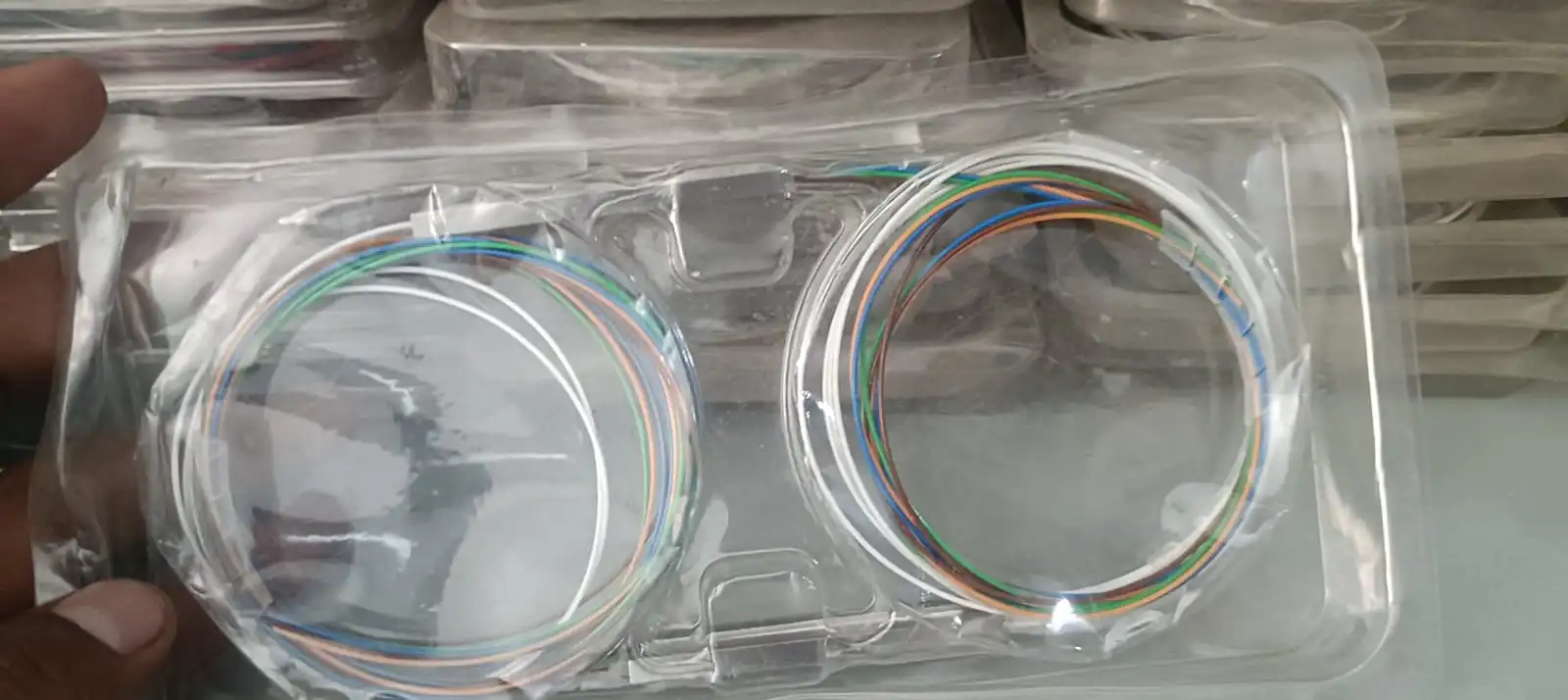

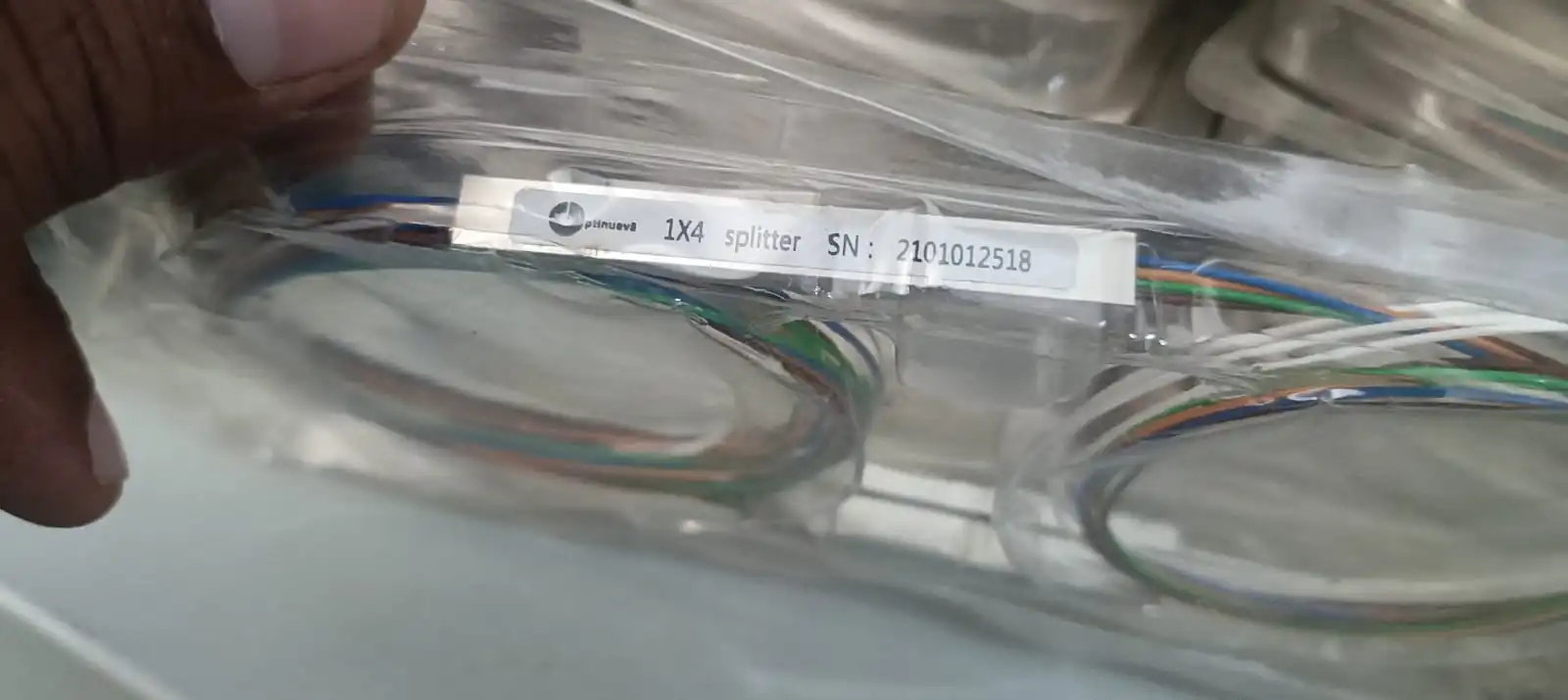
Introduction – 1×4 PLC Splitter
The 1×4 PLC Splitter is a passive fiber optic component designed to divide one incoming optical signal into four separate output paths. It is commonly used in FTTH, GPON, EPON and other PON-based fiber optic networks where one optical input needs to be distributed to multiple network branches.
PLC stands for Planar Lightwave Circuit, a technology used to provide consistent optical signal splitting across the supported wavelength range. Since a PLC splitter is passive, it does not require an external electrical power supply to perform its optical splitting function.
For ISPs and fiber network installers, a 1×4 Fiber Optic Splitter can be useful when a network design requires four optical distribution paths from a single input. check here more saplliter
What is a 1×4 PLC Splitter?
A 1×4 PLC Splitter means that the splitter has:
1 Optical Input → 4 Optical Outputs
The incoming optical signal enters through the single input and is divided between four output ports.
The 1×4 configuration is useful when a fiber network needs more distribution points than a 1×2 splitter but does not require a larger split ratio such as 1×8 or 1×16.
Because the splitter is passive, it does not need electricity at the splitting point. This makes it suitable for many passive fiber distribution applications.
Why Use a 1×4 Fiber Optic Splitter in FTTH Networks?
A 1×4 Fiber Optic Splitter can be used when a single optical fiber needs to feed four separate optical paths.
In FTTH installations, the splitter may be placed at an appropriate distribution point according to the network architecture. It can help an ISP divide an optical connection into multiple branches while keeping the network passive at the splitter location.
However, the splitter ratio must always be selected according to the complete optical budget. A higher split ratio means the available optical power is distributed among more outputs, so splitter loss becomes an important consideration.
1×4 PLC Splitter for GPON & EPON Networks
The 1×4 PLC Splitter is suitable for compatible GPON and EPON PON architectures.
In a passive optical network, optical splitters are used between the OLT and subscriber-side equipment to distribute optical signals across the access network. A 1×4 configuration provides four output branches from one optical input.
For an ISP deployment, the correct splitter should be selected after considering:
- OLT optical output
- Fiber distance
- Splitter insertion loss
- Connector losses
- Splice losses
- Optical power budget
- ONT/ONU receiver sensitivity
- Overall PON architecture
1×4 Fiber Splitter for ISP & FTTH Installation
For an ISP, the 1×4 Fiber Splitter can be useful in network designs where four optical distribution paths are required.
It can be installed in suitable fiber distribution boxes, cabinets, modules, FTTH distribution points and other compatible fiber infrastructure depending on the product’s physical package.
The compact passive design makes it suitable for professional fiber installations where reliable optical distribution is required without adding an active electrical device.
Technical Specifications of 1×4 PLC Splitter
Important: Exact specifications vary according to manufacturer, package and splitter variant. Use your actual product datasheet for final values.
| Specification | Details |
|---|---|
| Product Type | 1×4 PLC Splitter |
| Technology | PLC – Planar Lightwave Circuit |
| Split Ratio | 1 Input / 4 Outputs |
| Fiber Type | Singlemode |
| Application | FTTH / FTTx / PON |
| Network | GPON / EPON |
| Operating Wavelength | Product Dependent |
| Insertion Loss | Product Dependent |
| Connector Options | SC/APC, SC/UPC, LC, FC etc. depending on variant |
| Package | Bare Fiber / Mini Module / ABS Box etc. |
| Power Requirement | Passive – No External Power Required |
How to Use a 1×4 PLC Splitter?
Installing a 1×4 PLC Splitter should be performed by a trained fiber technician.
Basic installation:
- Identify the incoming optical fiber.
- Confirm that a 1×4 split ratio is required.
- Connect or splice the incoming fiber with the splitter input.
- Connect the four output fibers to their respective network paths.
- Clean all fiber connectors before connection.
- Check that fibers are not bent beyond the recommended bend radius.
- Measure optical power after installation.
- Confirm that the complete link remains within the required optical budget.
Proper connector cleaning is especially important because dust or contamination on fiber connectors can affect optical performance.
1×4 PLC Splitter Insertion Loss
Insertion loss is an important specification when selecting a fiber optic splitter.
When one optical signal is divided into four outputs, the available optical power is distributed between those outputs. The splitter itself also introduces additional optical loss.
Therefore, an ISP should not select a 1×4 PLC Splitter only by looking at its split ratio. The specified maximum insertion loss, operating wavelength, connector loss and complete PON optical budget should also be considered.
The exact insertion-loss value should always be taken from the manufacturer’s test report or datasheet for the particular splitter.
1×4 PLC Splitter vs 1×2, 1×8 & 1×16
The main difference between these PLC splitters is the number of output paths.
| Splitter | Input | Outputs | General Application |
|---|---|---|---|
| 1×2 | 1 | 2 | Two-way distribution |
| 1×4 | 1 | 4 | Four-way distribution |
| 1×8 | 1 | 8 | Higher subscriber distribution |
| 1×16 | 1 | 16 | Larger FTTH distribution |
| 1×32 | 1 | 32 | High-density PON |
| 1×64 | 1 | 64 | Large subscriber networks |
A 1×4 splitter is therefore a useful middle option when two outputs are not enough but an 8-way split is unnecessary.
Where is a 1×4 Fiber Optic Splitter Used?
A 1×4 Fiber Optic Splitter can be used in:
- FTTH broadband networks
- GPON networks
- EPON networks
- Passive Optical Networks
- FTTx deployments
- Fiber distribution points
- Telecom infrastructure
- Optical communication systems
- ISP network installations
- Fiber testing and distribution setups
The exact location of the splitter depends on the network architecture designed by the ISP or fiber engineer.
Why Choose a PLC Fiber Splitter?
A PLC Fiber Splitter uses Planar Lightwave Circuit technology to distribute optical signals through a passive optical component.
One of its major advantages is that it does not require electrical power at the splitter location. This makes it practical for passive fiber infrastructure where the optical signal needs to be distributed without installing an active powered device.
PLC splitters are available in several configurations, including 1×2, 1×4, 1×8, 1×16, 1×32 and 1×64, allowing network designers to select a suitable split ratio according to the project requirements.
Important Things to Check Before Buying a 1×4 PLC Splitter
1. Confirm the Split Ratio
Make sure your network requires 1 input and 4 outputs.
2. Check Connector Type
Confirm whether you need SC/APC, SC/UPC, LC, FC or a splice-ready configuration.
3. Check Fiber Compatibility
For FTTH/PON applications, verify compatibility with the single-mode fiber used in your network.
4. Check Insertion Loss
Insertion loss directly affects your optical power budget, so always check the manufacturer’s specification.
5. Check Operating Wavelength
Make sure the splitter supports the wavelength range required by your PON system.
6. Select the Correct Package
Choose the appropriate package according to where you intend to install it, such as a bare-fiber, mini-module or ABS-box version.
1×4 PLC Splitter for Wholesale & Bulk ISP Orders
If you are an Internet Service Provider, FTTH contractor, telecom dealer, fiber installer, distributor or system integrator, a 1×4 PLC Splitter can be an important passive component for suitable fiber distribution projects.
Wholesale buyers often require multiple splitter ratios for different network designs. Along with 1×4, you may also require 1×2, 1×8, 1×16, 1×32 or 1×64 configurations depending on your deployment.
Wisdom Tech Solutions supplies FTTH and networking products for ISP and professional fiber installation requirements.
For bulk orders, buyers can enquire about 1×4 PLC Splitter wholesale pricing, connector options, quantity availability and project requirements.
⭐ Product Highlights
🔥 1×4 PLC Splitter
- 1 Optical Input
- 4 Optical Outputs
- PLC Technology
- Passive Optical Component
- No External Power Required
- Singlemode Fiber Application
- FTTH Compatible
- GPON Compatible
- EPON Compatible
- Suitable for PON Networks
- Multiple Connector Options
- Suitable for ISP & FTTH Installation
- Wholesale Quantity Available
❓ Frequently Asked Questions
What does 1×4 PLC Splitter mean?
A 1×4 PLC Splitter has one optical input and four optical outputs, allowing one incoming optical signal to be distributed across four output paths.
Is a 1×4 PLC Splitter suitable for FTTH?
Yes. A 1×4 PLC splitter can be used in suitable FTTH network designs where four optical distribution paths are required.
Can I use a 1×4 PLC Splitter with GPON?
Yes, a compatible 1×4 PLC splitter can be used in GPON networks when the splitter specifications and optical budget match the network design.
Can a 1×4 PLC Splitter be used for EPON?
Yes. It can be used in compatible EPON/PON architectures for passive optical signal distribution.
Does a 1×4 PLC Splitter require electricity?
No. A PLC splitter is a passive optical component and does not require electrical power for optical splitting.
What is the difference between 1×2 and 1×4 PLC Splitter?
A 1×2 splitter provides two outputs, while a 1×4 PLC Splitter provides four outputs from one optical input.
Which connector is available with a 1×4 Fiber Optic Splitter?
Depending on the variant, it may be available with SC/APC, SC/UPC, LC, FC or splice-ready fiber configurations. Always select the connector according to your installation requirement.
Is a 1×4 splitter better than a 1×8 splitter?
Neither is universally better. The correct choice depends on how many output branches are required and how much optical power is available in the network.
Can a 1×4 splitter be connected directly to an ONT?
The splitter is normally part of the optical distribution path between the network side and subscriber-side equipment. The actual topology should follow the ISP’s PON design and optical budget.
What should an ISP check before buying a 1×4 PLC Splitter?
Check the split ratio, insertion loss, operating wavelength, connector type, fiber type, package, return loss and optical budget compatibility before purchasing.

Reviews
There are no reviews yet.