
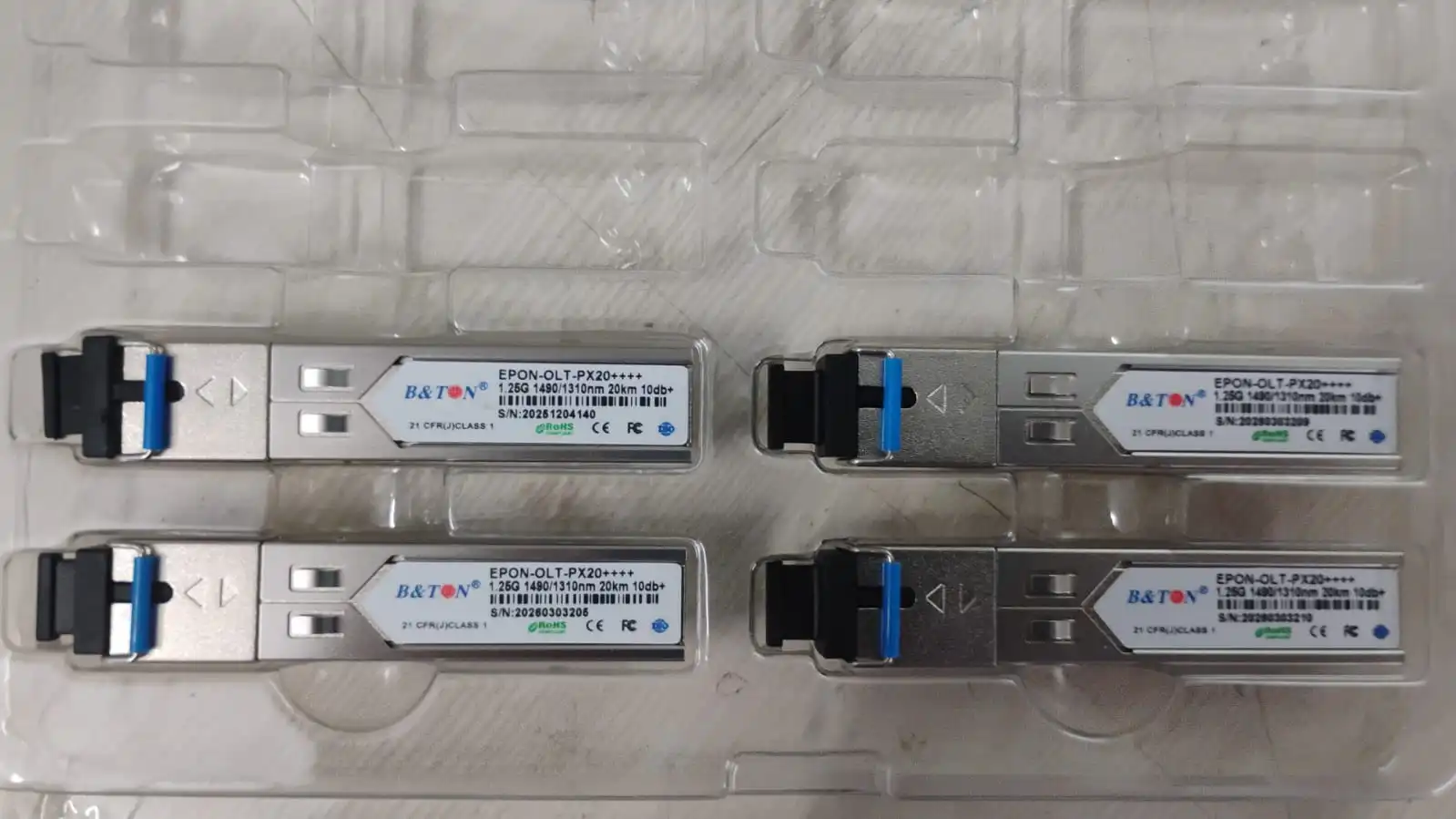
10+ Power EPON SFP Module for EPON OLT | 20KM High Power Optical Transceiver
Introduction
A reliable FTTH network begins with the right optical components, and the 10+ Power EPON SFP Module for EPON OLT is one of the most important parts of an EPON deployment. Designed for Internet Service Providers (ISPs), telecom operators, and fiber network integrators, this high-power optical transceiver helps establish a stable communication link between the EPON OLT and connected ONUs. Supporting up to 20KM transmission over single-mode fiber, it delivers dependable optical performance for long-distance broadband networks.
Whether you’re expanding an existing FTTH infrastructure or deploying a new EPON network, choosing the correct SFP module directly affects network stability, optical signal quality, and customer satisfaction. This module is suitable for professional broadband deployments where consistent optical performance and long-term reliability are essential. check here more sfp
What is a 10+ Power EPON SFP Module for EPON OLT?
The 10+ Power EPON SFP Module for EPON OLT is a high-power optical transceiver specifically developed for EPON Optical Line Terminal (OLT) devices. Unlike a standard Ethernet SFP, this module communicates with EPON ONUs through passive optical networking technology. It converts electrical signals from the OLT into optical signals and transmits them through single-mode fiber to subscriber locations.
Its higher optical output allows it to support longer transmission distances and better optical budgets, making it suitable for ISP deployments where multiple subscribers are connected through optical splitters. For network operators, selecting a quality EPON OLT SFP module helps improve uptime, reduce signal loss, and simplify future network expansion.
Why Should ISPs Choose a 10+ Power EPON SFP Module for EPON OLT?
Internet Service Providers need equipment that performs reliably every day. The 10+ Power EPON SFP Module for EPON OLT is designed to maintain stable optical communication even in demanding FTTH environments. High-power optical output helps compensate for splitter loss and long fiber routes, making it a preferred choice for medium and large EPON deployments.
Using a reliable SFP module reduces maintenance calls, minimizes optical signal fluctuations, and improves overall customer experience. For ISPs purchasing networking equipment in bulk, investing in dependable optical modules can significantly improve long-term network performance while reducing operational issues.
How Do You Choose the Right 10+ Power EPON SFP Module for Your OLT?
Before purchasing a 10+ Power EPON SFP Module for EPON OLT, always check whether the module matches your OLT platform. Verify compatibility with the OLT brand, supported optical class, transmission distance, connector type, wavelength, and firmware requirements. It is also important to ensure that the optical budget is suitable for your splitter ratio and fiber route.
For professional FTTH deployments, choosing the correct SFP module helps avoid compatibility problems, optical alarms, and unnecessary downtime. Network engineers often test one module before placing bulk orders to confirm interoperability with their existing infrastructure. sfp tenclogye info
Can a 10+ Power EPON SFP Module Improve FTTH Network Performance?
Yes. A quality 10+ Power EPON SFP Module for EPON OLT plays a major role in maintaining stable optical communication across the entire FTTH network. Strong optical performance helps reduce packet loss, minimizes connection interruptions, and supports reliable broadband delivery to multiple subscribers.
For networks covering larger geographical areas, higher optical output allows greater flexibility when using optical splitters and longer fiber runs. This makes the module suitable for residential broadband, enterprise connectivity, educational institutions, and commercial FTTH projects where stable service is essential.
Technical Specifications of 10+ Power EPON SFP Module for EPON OLT
- Product Type: EPON OLT SFP Module
- Optical Class: 10+ Power
- Application: EPON OLT
- Network Standard: IEEE 802.3ah
- Transmission Distance: Up to 20KM
- Data Rate: 1.25Gbps
- Fiber Type: Single Mode Fiber (SMF)
- Optical Connector: SC
- Installation: Hot-Pluggable SFP
- Suitable For: FTTH Broadband, ISP Networks & Telecom Infrastructure
How to Install and Use a 10+ Power EPON SFP Module for EPON OLT
Installing the 10+ Power EPON SFP Module for EPON OLT is simple when proper fiber handling practices are followed. Insert the module carefully into the compatible SFP slot of the OLT until it locks securely. Before connecting the optical cable, clean the connector to remove dust and contaminants that could affect signal quality.
After connecting the fiber, verify the TX and RX optical power levels and ensure that the OLT detects the module correctly. Finally, test communication with connected ONUs and monitor optical performance before activating subscriber services. Regular cleaning and proper installation help maximize the lifespan of the module and maintain stable network performance.
Frequently Asked Questions (FAQs)
1. What is the maximum distance supported by a 10+ Power EPON SFP Module for EPON OLT?
Most high-power models support up to 20KM transmission over compatible single-mode fiber, making them suitable for long-distance FTTH deployments.
2. Is the 10+ Power EPON SFP Module compatible with every EPON OLT?
Compatibility depends on the OLT manufacturer, firmware, and supported optical modules. Always verify compatibility before purchasing.
3. Which fiber cable should be used with a 10+ Power EPON SFP Module?
This module is designed for Single Mode Fiber (SMF), which is commonly used in FTTH and telecom networks for long-distance communication.
4. Why is a High-Power EPON SFP Module better for ISP networks?
High-power optical output helps maintain stable communication over longer fiber distances and through higher splitter ratios, improving network reliability.
5. How can I verify whether my EPON OLT supports this SFP module?
Check your OLT model specifications, supported SFP types, optical class, wavelength requirements, and firmware compatibility. If you’re planning a bulk purchase, testing one module before deployment is a good practice.
Reviews
There are no reviews yet.